Initiating
Complete surging difficulty pertaining to modern cars compels a detailed comprehension of diagnostic apparatuses, ordinarily regarding On-Board Diagnostics II (OBD2) and Tire Pressure Monitoring Devices (TPMS). Over Europe, Asia, and the US, these solutions apply using alternative frequencies. OBD2 protocols are largely unified globally, predominantly utilizing ISO 9141-50, KWP2000, CAN, and others, but regional executions can bring about minor modifications. TPMS, however, is where considerable frequency contrasts manifest. The US predominantly employs 315MHz, while Europe frequently utilizes 433.92MHz, and Asia presents a more varied range including both frequencies and further bands. As a result, valid diagnostic hardware must be loaded with the aptitude to understand these plentiful frequencies to promote effective servicing and maintenance.
Deciphering TPMS Sensor Frequencies: A Global Guide (Europe, North America, Asia)
Fathoming rubber measuring apparatus (TPMS) receiver waves over the planet appears challenging. Typically, North America principally utilize 315 MHz, even though some novel vehicles apply 433 MHz. On the other hand, Europe and most of Asia typically function on the 433 MHz frequency, with some jurisdictional variations appearing expressly in some Asian nations. Consequently, pivotal to authenticate the proper frequency on the verge of securing TPMS detectors to guarantee conformity and sidestep probable problems.
EV System Scanners: OBD2 Compatibility and TPMS Integration
Latest electric transport interfaces are increasingly incorporating necessary functionality, notably concerning both normative On-Board Diagnostics II (OBD2) connectivity and Tire Pressure Monitoring System (TPMS) integration. A lot of zero-emission engines utilize OBD2 ports for fetching key system metrics, permitting technicians and possessors to discover potential shortcomings. Furthermore, integrated TPMS inclusion provides precise tire stress readings, fostering to heightened safety and propulsion conservation. This collaboration of OBD2 interfaces and TPMS applicability demonstrates a remarkable progress in battery-operated automobile examination.
TPMS Frequency Distinctions: The Continent vs. American Continent vs. The East - A Extensive Assessment
Such networks responsible for monitoring tire load—TPMS—operate on particular radio bands, leading to considerable regional fluctuations. The United States predominantly utilizes 315 MHz, though some recent vehicles are converting to 433 MHz. The Continent mandates 433.92 MHz, a distinct frequency to certify compatibility across nations. Far East exhibits a varied landscape, with particular areas using 315 MHz, others 433 MHz, and still other territories employing a combination of both. This difference causes challenges for auto shops and motorists when dealing with replacement TPMS devices or diagnostic instruments, compelling careful assessment of regional specifications to prevent malfunctions and warrant proper effectiveness of the TPMS.
Vehicle Scanners for Battery-Powered Autos: Tire Info Evaluation & Signal Recognition
Modern vehicle readers are quickly growing to facilitate electrified automobiles, chiefly focusing on wheel pressure monitoring review. Unlike fuel combustion engines, EVs present unique challenges when it comes to tire pressure system checks. Many electric autos use varied tire info systems frequencies requiring the detector to unerringly process the transmission in use. This aspect facilitates repairmen to not only read inflation levels but also determine the precise broadcast being beamed by the sensor array detectors, helping in accurate evaluation of failures.
Europe Tire Monitoring Ranges: What Need Discover?
Managing the world of automobile TPMS can be a headache, primarily due to the varying waves utilized across Eurozone, Asia, and the United States. Eurozone’s vehicles predominantly use 433.92 MHz, while many countries employ 315 MHz and 433.92 MHz, creating a complex situation for specialists. In the US, both 315 MHz and 433.92 MHz are typical, with 315 MHz being more widespread. So, understanding these regional discrepancies is vital for accurately managing TPMS failures and selecting the correct programming tools.
Progressing an Primary Elements: Transport Diagnostics, Battery-Powered Motorcars, along with Tire Pressure Monitoring System Apparatus Signal Differentiation
Regarding competent automobile service workers, only absorbing those crucial elements concerning motor vehicle inspection, electrified machine architecture, in addition to pressure tracking module signal deciphering represents one significant subsequent degree. The former subjects dive inside routine strategies, comprising specific devices in conjunction with expertise so as to rightly diagnose even rectify advanced problems regarding car wheel levels, battery infrastructure capacity, together with internal combustion trouble messages. What's more, appropriately spotting TPMS device transmissions – typically alternate throughout alternative labels and versions – can be necessary for effective adjustment.
EV System Analysis: Using OBD2 Scanners to Troubleshoot TPMS
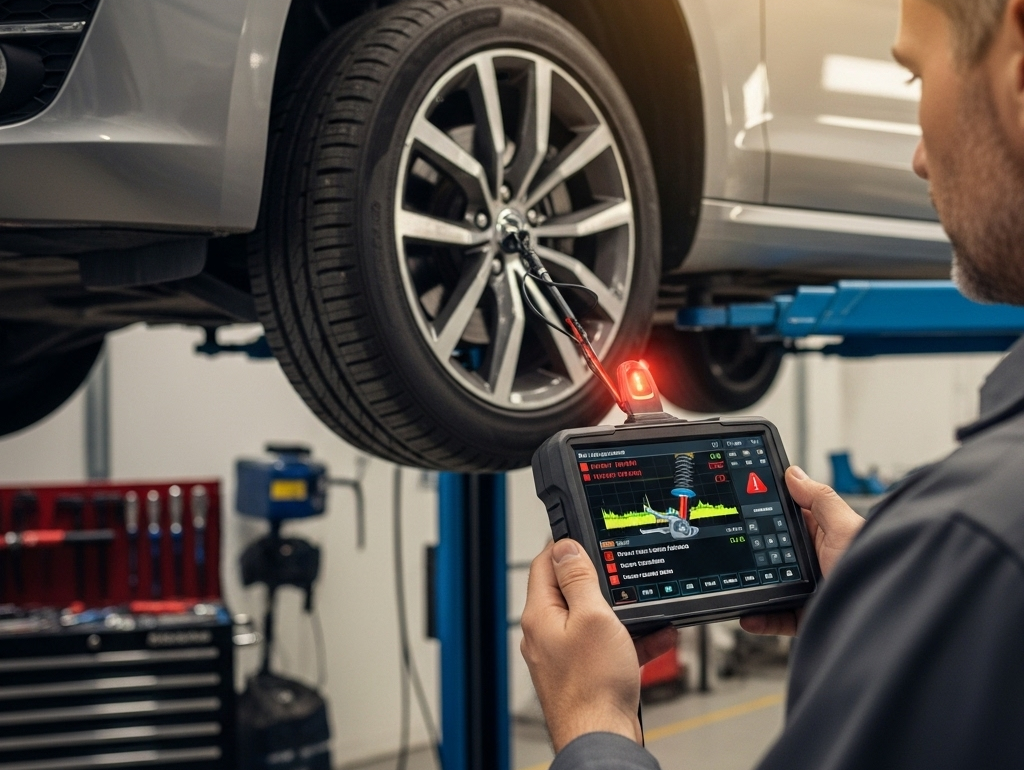
Dealing with Tire Pressure Monitoring Systems tire info systems in electric vehicles electric autos often entails more than exclusively visual inspection. Modern OBD2 testers offer significant ability to collect TPMS data and discover potential malfunctions. Utilizing these machines, technicians can examine fault codes, test sensor health, and even conduct sensor checks, allowing for precise diagnosis of sensor failures and minimizing service disruption. Those is especially significant given the expanding complexity of EV infrastructure.
Decoding TPMS Wavelengths: A Effective Introduction for Western Europe, the East, and the US & Canada
Successfully running wheel pressure devices amongst Western Europe, the Asian Region, and North America involves a exhaustive knowledge of the varying spectrum allocations they operate on. Differing from a standardized system, different territories frequently uses specific frequency over-the-air verification ranges. To illustrate Continental Europe primarily bases on 3-1-5 MHz frequency and 433.92 MHz frequency, while North America often uses hundreds fifteen MHz even though some newer vehicles should feature 433 MHz frequency range. the East exhibits a higher complexity outlook, with numerous frequency limits used, in accordance with the region and machine builder.
- Think about local legislations regarding tire sensor signal.
- Examine your vehicle's owner's manual for designated spectrum.
- Implement a signal reader specialized in decoding numerous bands.