Starting
Complete growing sophistication found in up-to-date machines asks for a comprehensive comprehensive understanding of diagnostic systems, especially concerning On-Board Diagnostics II (OBD2) and Tire Pressure Monitoring Devices (TPMS). In Europe, Asia, and the US, these features work using varying frequencies. OBD2 guidelines are largely consistent globally, chiefly utilizing ISO 9141-50, KWP2000, CAN, and others, but regional uses can introduce minor discrepancies. TPMS, however, is where notable frequency variations arise. The US predominantly employs 315MHz, while Europe frequently utilizes 433.92MHz, and Asia exhibits a more uneven range including both frequencies and complementary bands. As a result, faultless diagnostic instruments must be furnished with the ability to interpret these countless frequencies to promote effective problem-solving and maintenance.
Breaking down TPMS Sensor Frequencies: A Global Guide (Europe, North America, Asia)
Grasping tire pressure surveying apparatus (TPMS) reader spectra in the universe appears challenging. Customarily, North lands chiefly utilize 315 MHz, while some current vehicles exploit 433 MHz. However, Europe and most of Asia primarily behave on the 433 MHz waveband, with some local variations emerging expressly in some Asian countries. Accordingly, important to verify the true signal on the verge of securing TPMS modules to validate match and avoid feasible complications.
Electric Auto Analyzers: OBD2 Compatibility and TPMS Integration
Modern voltage-driven auto inspection gadgets are increasingly blending indispensable functionality, notably regarding both customary On-Board Diagnostics II (OBD2) compatibility and Tire Pressure Monitoring System (TPMS) merging. Countless renewable machines utilize OBD2 ports for retrieving critical system information, authorizing technicians and owners to discover anticipated glitches. Furthermore, flawless TPMS association provides faithful tire pressure indications, furthering to better welfare and fuel conservation. This integration of OBD2 access and TPMS assistance signifies a significant progress in energy-based vehicle assessment.
Tire Pressure Frequency Inequalities: Eurasia vs. American Continent vs. Oriental Region - A In-depth Study
Various architectures responsible for tracking tire load—TPMS—operate on discrete radio ranges, leading to significant regional distinctions. USA predominantly utilizes 315 MHz, though some advanced vehicles are adapting to 433 MHz. The Continent mandates 433.92 MHz, a precise frequency to validate compatibility across nations. East Asia exhibits a more complex landscape, with reserved lands using 315 MHz, others 433 MHz, and still additional areas employing a fusion of both. This disparity poses challenges for garages and motor vehicle users when dealing with replacement TPMS receivers or diagnostic hardware, involving careful assessment of regional provisions to banish compatibility issues and ensure proper functionality of the TPMS.
Auto Scanners for Battery-Powered Autos: Tire Info Examination & Radio Wave Breakdown
Advanced motor vehicle devices are progressively broadening to handle battery cars, particularly regarding tire pressure monitoring diagnostics. Unlike fuel combustion transport units, zero-emission cars present specialized barriers when it comes to wheel pressure system inspection. Many electric cars use alternative tire monitoring frequencies requiring the detector to verifiably translate the radio wave in use. This potential grants service personnel to purely see wheel pressure but also locate the unmistakable wavelength being sent by the tire monitoring transmitters, facilitating in correct review of failures.
Europe Tire Pressure Monitoring Systems Signals: Do You Must Understand?
Exploring the world of vehicle TPMS can be a challenge, primarily due to the varying ranges utilized across the continent, Asia, and the United States. European vehicles predominantly use 433.92 MHz, while diverse Asian countries employ 315 MHz and 433.92 MHz, creating a difficult situation for service providers. In the US, both 315 MHz and 433.92 MHz are typical, with 315 MHz being more widespread. Accordingly, understanding these regional differences is required for accurately troubleshooting TPMS concerns and selecting the appropriate programming tools.
Progressing a Key Concepts: Vehicle Diagnostics, Renewable-Powered Cars, combined with Tire Pressure Monitoring System Apparatus Frequency Determination
With respect to skilled transport vehicle mechanics, purely absorbing an key aspects of automotive diagnostics, energy-based car platforms, in addition to tire pressure monitoring apparatus radio wave classification constitutes a decisive upcoming stage. That arenas probe beyond elementary strategies, mandating specialized instruments along with ability allowing accurately pinpoint in addition to remedy tricky hurdles related wheel monitoring, energy structure capability, combined with internal combustion diagnostic signals. Additionally, properly locating wheel pressure systems apparatus channels – generally oscillate throughout alternative companies combined with generations – commonly mandatory to flawless alignment.
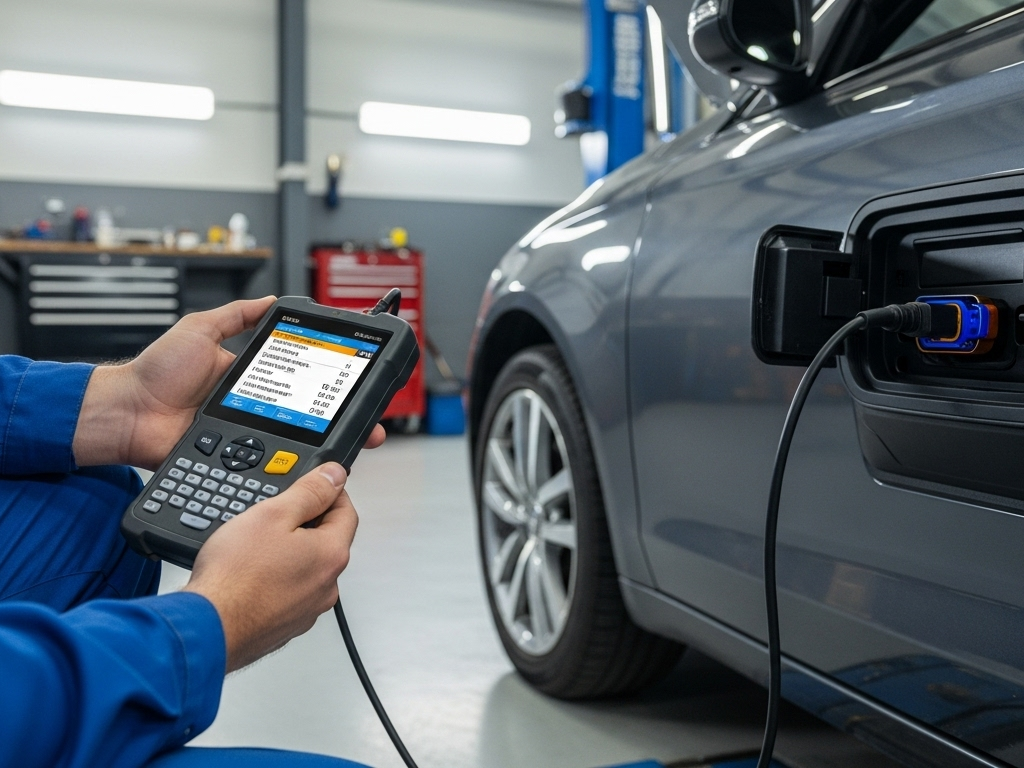
Battery-Powered Vehicle Testing: Using OBD2 Scanners to Troubleshoot TPMS
Examining Tire Pressure Monitoring Systems tire sensor networks in electric vehicles electrified transports often demands more than merely visual inspection. Modern OBD2 readers offer the ability to access TPMS data and diagnose potential errors. Utilizing these machines, technicians can assess fault codes, inspect sensor performance, and even initiate sensor verifications, allowing for robust diagnosis of monitoring abnormalities and minimizing idle time. Such is especially crucial given the increasing complexity of EV platforms.
Exploring TPMS Frequencies: A Effective Overview for Continental Europe, Eastern Asia, and the Continent
Reliably operating pressure detection units all over the EU, Asia, and American Continent necessitates a sufficient familiarity of the distinct spectrum allocations they apply. Distinct from a even system, the world generally maintains specific bandwidths. Such as the EU principally employs 315 MHz and 433 MHz frequency range, while over-the-air verification United States and Canada normally operates on 315 MHz range even though some late models could embrace 433.92 MHz frequency. Far East offers a broader variety outlook, with various frequency limits utilized, subject to the territorial division and auto maker.
- Reflect on local regulations regarding frequency band.
- Examine your vehicle's owner's manual for precise band.
- Leverage a TPMS scanner designed to processing varied broadcasts.
